
Table of contents
Why Video Clipping Is Suddenly A Brand Thing
Cheap Clipping Can Make Good Source Material Feel Worse
The Brand Clip Has To Pass A Higher Test
Paid Clipping Also Has A Disclosure Layer
A Simple Brand Clipping Scorecard
What This Looks Like In Real Source Material
When A Clipper Is Enough, And When You Need Strategy First
You record the podcast. Or the webinar. Or the founder video where you finally explain the thing properly.
Then someone says: “We should clip this.”
Fair.
Clips are everywhere now. Big brands are using them. Creator operators are building agencies around them. Long-form videos get chopped into little moments and sent into TikTok, Reels, Shorts, LinkedIn, X, wherever attention is still moving.
And honestly, it makes sense.
If you already did the hard work, if you already sat down and explained something useful for 45 minutes, it feels a bit silly to let that recording die inside a folder.
But for a brand, clipping gets weird fast.
Some clips build trust. Some clips look like spam with better subtitles. Some clips get views but pull in people who will never buy from you. Some clips are basically ads, even if everyone involved wants to pretend they are just “organic content”.
That is where a brand video clipping strategy matters.
Not a huge deck. Not a 19-step content calendar with color-coded tabs. Just a clean way to decide what deserves to become a clip, how it represents your business, and what should happen after someone watches.
Why Video Clipping Is Suddenly A Brand Thing
Clipping used to feel like creator internet stuff.
Podcasters. Streamers. Music campaigns. People paying random clip accounts to flood the feed and see what catches.
Now brands are paying attention.
The Wall Street Journal reported in June 2026 that big brands, venture investors, and MrBeast-linked operators are moving into short-video clipping. Business Insider also covered the risk side: when brands pay people to clip and promote content, disclosure starts to matter.
Vox and The Verge have both covered the broader clip economy too. The point is simple: clips are no longer just leftovers from long-form content. In many feeds, they are the thing people see first.
That creates an obvious opportunity.
Your long-form material can travel further.
Your best explanations can reach people who would never click a 52-minute episode cold.
Your strongest proof, objections, frameworks, and stories can show up again and again in useful little pieces.
Nice.
But there is a catch.
The same tactic that gives you reach can also make your brand feel cheap if you use it badly.
For expert-led businesses, that matters a lot. You are not trying to become a random clip farm. You are trying to make the right person think, “Ok, these people get my problem.”
Cheap Clipping Can Make Good Source Material Feel Worse
Let’s say you have a good 60-minute founder podcast.
Inside it, there are probably a few useful moments:
- a sharp explanation of the painful mistake your buyer keeps making,
- a client story,
- a framework that makes the category easier to understand,
- a bit of proof,
- a line that would make a buyer stop and think.
That is the good stuff.
But if the clipping brief is only “find the most viral moments”, the output can drift into strange territory.
Suddenly the best business clip is ignored because it is too calm.
The spicy aside gets picked because it has more drama.
The clip gets captions, zooms, jump cuts, maybe a loud hook, and yes, maybe it gets views. But it does not move the right person closer to trust.
This is the trap.
For a creator trying to grow a broad audience, maybe that is fine. For a business selling a real offer, random attention can become expensive noise.
Before you hire clippers, editors, or a content repurposing service, decide what kind of moments are allowed to represent the brand.
That starts before editing.
A good video content repurposing strategy scores source material first. It asks what the clip should do for trust, not only what might get a reaction.
The Brand Clip Has To Pass A Higher Test
A normal clip can be entertaining.
A brand clip has to carry meaning.
If you are an expert-led business, a useful clip usually does at least one of these jobs:
- makes a buyer feel understood,
- explains a mistake they are already living with,
- shows proof without bragging too hard,
- answers an objection,
- gives language to a problem,
- routes the viewer toward deeper trust.
That last one is easy to miss.
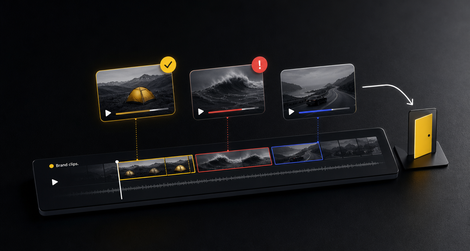
A clip is one small door in the larger journey.
Someone sees a 38-second clip from your podcast. Great. What next?
Do they find the full episode?
Do they see the webinar replay?
Do they understand the offer?
Do they know what to do if they want help?
This is the post-watch gap. The moment got attention, but there is no clear next step.
And if you are clipping as a brand, that gap hurts more. You are spending real source material, real trust, and sometimes real budget. The clip should lead somewhere.
Not every clip needs to sell. Please do not make every clip a tiny pitch. That gets gross quickly.
But the best clips should have a job.
Some can build familiarity. Some can send people back to the long-form asset. Some can warm up a service page. Some can support a launch. Some can make a future sales conversation easier because the buyer already heard your thinking.
That is the difference between “we posted clips” and “we used source material properly”.
Paid Clipping Also Has A Disclosure Layer
Quick practical note.
This is not legal advice. You should ask a lawyer if you are running paid campaigns, influencer deals, or third-party clipper networks.
But you should not ignore disclosure.
The FTC’s Disclosures 101 guide says people should disclose financial, employment, personal, or family relationships with a brand when endorsing products. It also says disclosures should be hard to miss and, for video endorsements, should be in the video, not only in the description.
YouTube’s paid promotion help page explains its setting for paid product placements, sponsorships, and endorsements. TikTok’s branded content guidance covers content that promotes a brand, product, or service.
The practical takeaway:
If a clip is paid promotion, treat it like paid promotion.
Do not hide the relationship in tiny text nobody sees.
Do not assume the platform checkbox handles everything.
Do not let a clipper network make your brand look like fake organic hype.
Again, this is why strategy matters. The more your clips look like anonymous manufactured popularity, the more trust you can burn while chasing reach.
And trust is the whole asset.
A Simple Brand Clipping Scorecard
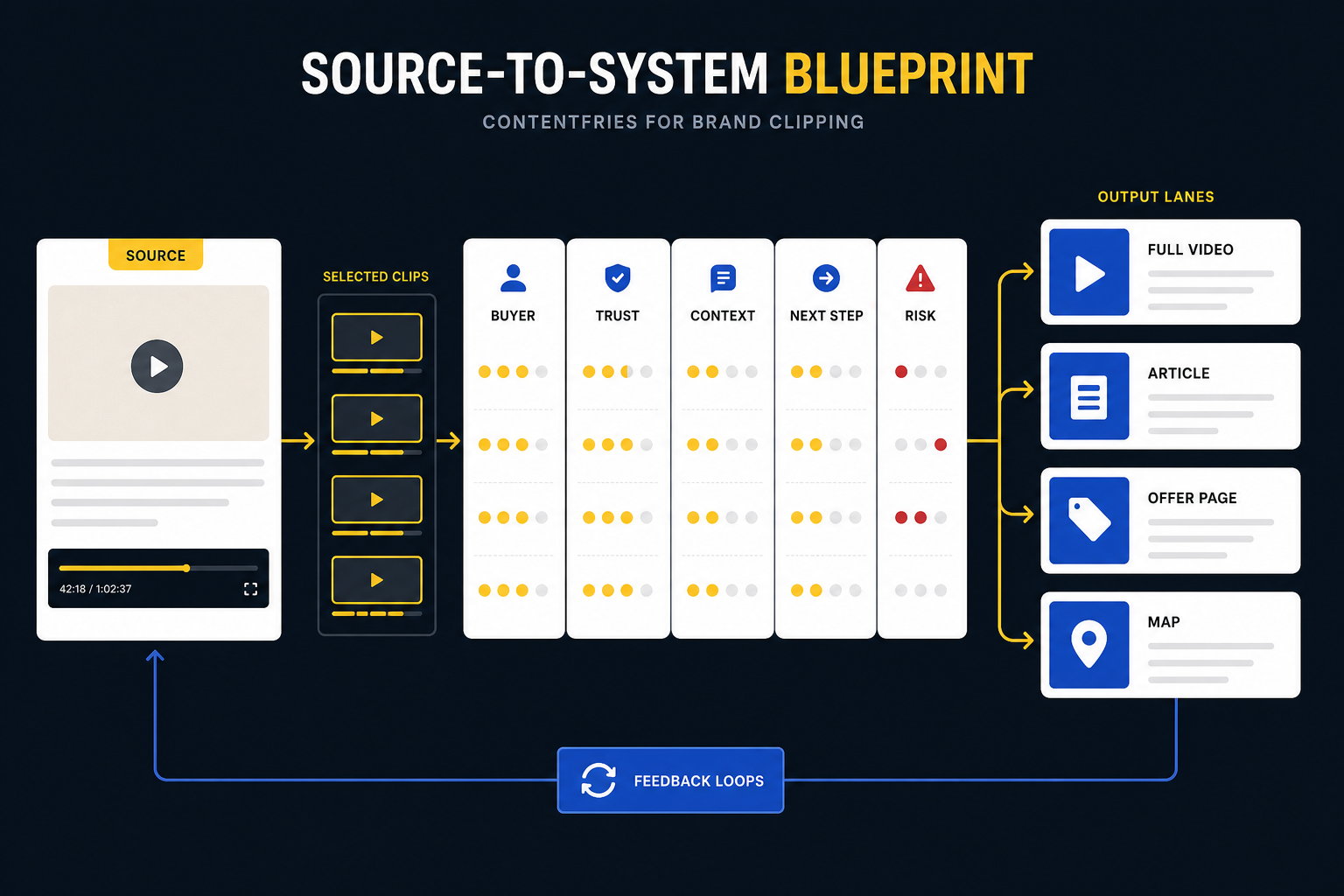
Use this before turning a long-form piece into short clips.
You can run it on a podcast, webinar, founder video, demo, workshop, sales call, or long YouTube episode.
Give each possible clip a quick score from 0 to 2.
1. Buyer Relevance
Would the right buyer recognize themselves in this moment?
0 means generic. Anyone could watch and nod.
1 means useful, but broad.
2 means painfully specific. Your buyer knows this problem.
2. Trust Value
Does this clip make the business more credible?
0 means entertaining but empty.
1 means helpful.
2 means it proves taste, judgment, experience, or a real point of view.
3. Source Context
Can the clip stand alone without twisting the meaning?
0 means it needs too much context.
1 means it works with a good caption.
2 means it is clear on its own and still makes people want the full version.
4. Next Step
Does the clip have a natural place to send people?
0 means dead end.
1 means it can point to a related post or episode.
2 means it clearly connects to a full video, article, offer page, or diagnostic next step.
5. Trust Risk
Could this clip feel misleading, overhyped, or too promotional?
0 means risky. Be careful.
1 means fine with context.
2 means clean, honest, and easy to stand behind.
Now add it up.
- 8-10: strong brand clip. Produce it properly.
- 5-7: maybe useful. Improve hook, context, or next step first.
- 0-4: skip it unless there is a very specific reason.
Simple. Almost annoying.
But this little scorecard prevents a lot of dumb output.
It keeps you from clipping only the loudest moments. It also keeps you from burying the quiet moments that could make the right person trust you faster.
What This Looks Like In Real Source Material
Imagine you ran a webinar for consultants.
The easy clipping plan says:
“Make 10 clips.”
The better plan asks:
“Which 3 moments would help the right consultant trust us enough to take the next step?”
Maybe one clip explains the mistake people make when they hire a cheap editor. That can link naturally to a content repurposing service vs video editor comparison.
Maybe one clip explains the framework from the webinar. That can point to a deeper webinar content repurposing article.
Maybe one clip shows a moment from a podcast guest that answers a sales objection. That can support your podcast clips that drive leads path.
Now the clips are not random.
They are little bridges.
Each one takes a specific piece of source material and gives the viewer somewhere sensible to go next.
That is what most clip farms miss. They optimize the clip as if the clip is the whole business.
For a brand, the clip is part of a system.
When A Clipper Is Enough, And When You Need Strategy First
Sometimes you only need a clipper.
You already know the moments. You already know the message. You have a clear content system. You just need someone to edit the clips cleanly and keep the output moving.
Great. Hire the clipper.
But if you have a folder full of long-form videos and no clear idea what matters inside them, do not start with volume.
Start with a map.
You probably need strategy first when:
- you have podcasts, webinars, demos, or lessons sitting unused,
- you are unsure which moments support the offer,
- previous clips got views but no useful conversations,
- your team argues about what counts as “good content”,
- you want clips to support trust, not only reach,
- you need internal editors or freelancers to stop guessing.
That is where the free private Clip Opportunity Map fits nicely.
It looks at your long-form videos and helps you see what is worth repurposing first, why it matters, and how the best moments could warm up the right people before they ever land on your offer.
Yummy side-effect: it can also show where your titles, thumbnails, and long-form packaging are leaving views on the table.
The Best Brand Clips Feel Honest
This is the boring answer, but it is true.
The best brand clips do not feel like fake popularity.
They feel like someone pulled the useful part forward.
A sharp explanation.
A real objection.
A small proof moment.
A line that helps the buyer say, “Yes, that is exactly what keeps happening.”
That kind of clip does not need to scream.
It needs to be selected well, packaged clearly, and connected to the next step.
If you already have long-form source material, there is probably something useful inside it. Maybe a lot. But you do not need to turn all of it into clips.
You need to find the few moments that can carry trust.
Want the free private Clip Opportunity Map for your archive? Start here: ContentFries Clip Opportunity Map.
Sources
- The Wall Street Journal: Big Brands, Venture Capital and MrBeast Put Money Behind Short-Video Clipping
- Business Insider: A warning for brands: Be careful when clipping
- Vox: How clips ate the internet
- The Verge: The clippening
- FTC: Disclosures 101 for Social Media Influencers
- YouTube Help: Add paid product placements, sponsorships and endorsements
- TikTok Help: Promoting a brand, product, or service