
Table of contents
Most founders publish when they feel like it. That works fine until it doesn’t, and then weeks go by without a single post, video, or email. The content gap widens, the algorithm forgets you exist, and starting back up feels harder than it did the first time.
The fix is not more motivation. It is a repeatable system built around one weekly recording that feeds every other format you need to publish.
This post walks through the exact framework, from capturing one video to shipping a full content stack, without a team, without a complicated tool setup, and without starting from scratch each week.
The Founder Content Trap
Check your drafts folder. Somewhere in there sits a half-finished thread, a video you never edited, and a newsletter you meant to send two weeks ago.
Most founders are not lazy about content. They post in bursts: a heavy week on LinkedIn, a podcast appearance, a thread that gets traction. Then a product issue hits, and the content stops. The audience that just found you sees silence.
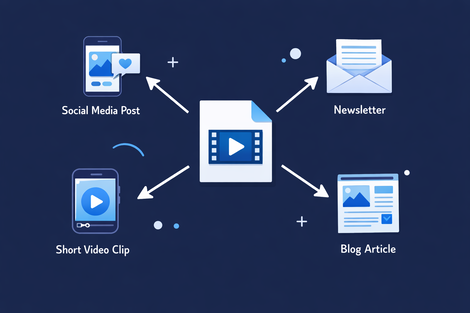
The trap is building a habit around energy instead of structure. A founder records a product demo, posts it once on LinkedIn, and moves on. That same recording could become a newsletter section, three short clips, a set of quote cards, and five blog topic ideas. Instead, it expires unused.
When motivation drives publishing, the pattern looks like this:
- Three posts one week, nothing the next
- A video recorded but never distributed beyond one platform
- Email drafts that never ship
A system fixes this. You define the formats, the output targets, and the workflow once. Then each week, you follow the recipe instead of writing a new one.
The One-Recording-to-Content-Stack Framework
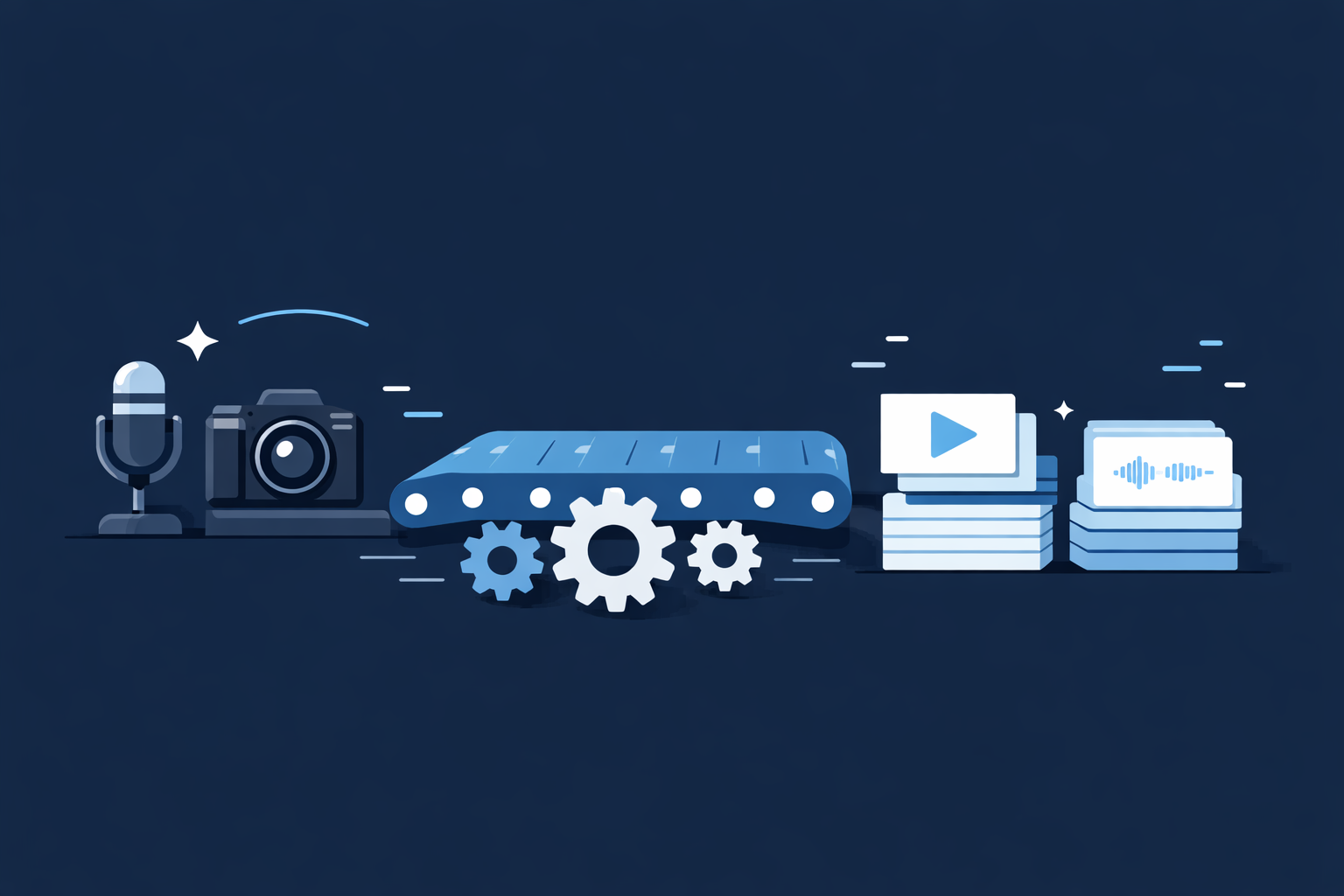
One 20-minute video becomes the raw material for a full week of content across multiple channels. That is the core idea behind a content stack: one source, many formats, one repeatable workflow.
The framework runs in three layers:
- Source layer: A single weekly recording, video or audio, feeds everything else.
- Format layer: Preset templates pull specific content types from that recording. A LinkedIn post pulls from one segment. A newsletter section pulls from another. A short-form clip comes from the strongest 60 seconds.
- Output layer: Each format ships to its channel on a fixed schedule, not when it feels ready.
It does not even have to be a polished recording
Here is a real example. For this very blog post, I recorded a raw audio of my blog topic ideas, put a static image behind it to turn it into a video file, and dropped it into ContentFries. The tool analyzed the audio, suggested five blog topics, and I have been publishing from that list ever since. The recording took maybe ten minutes. No script, no editing, no camera setup.
Another example: we manage content for a client who runs a podcast. Each episode goes through ContentFries, which pulls out short clips, generates thumbnails for YouTube, and suggests quote cards we can use as filler content between episodes. When the content calendar runs thin, those quote cards buy us a full extra week of posts with almost zero effort.
Building Your Content Recipe
Your content recipe is what separates a repeatable system from a weekly guessing game. Without one, you make small decisions every cycle: which format to use, what to include, where to publish. Those decisions add up.
Define your output targets first
Before you touch a template, decide what your content stack actually produces each week:
- One short-form video clip (pulled from the strongest segment of your recording)
- One LinkedIn post (a single insight, written in plain language)
- One newsletter section (a deeper take on the same topic)
- One set of quote cards (visual filler content you can schedule anytime)
- Blog topic ideas (generated from the same source material)
That is a five-piece stack from one recording.
Match formats to where your audience actually is
The format you choose should reflect where your buyers spend time, not where content advice says you should be. A B2B founder selling to ops teams gets more traction on LinkedIn and email than on short-form video. Pick two or three channels and build presets for those only.
Keep a one-page content recipe in a shared doc. List your formats, the channel each one ships to, and the day it publishes. That single document becomes your weekly reference.
For a version that also records source permission, owners, review decisions, live URLs, and measurement, copy the content repurposing workflow template.
Batch Production: How to Stay Consistent Without Burning Out
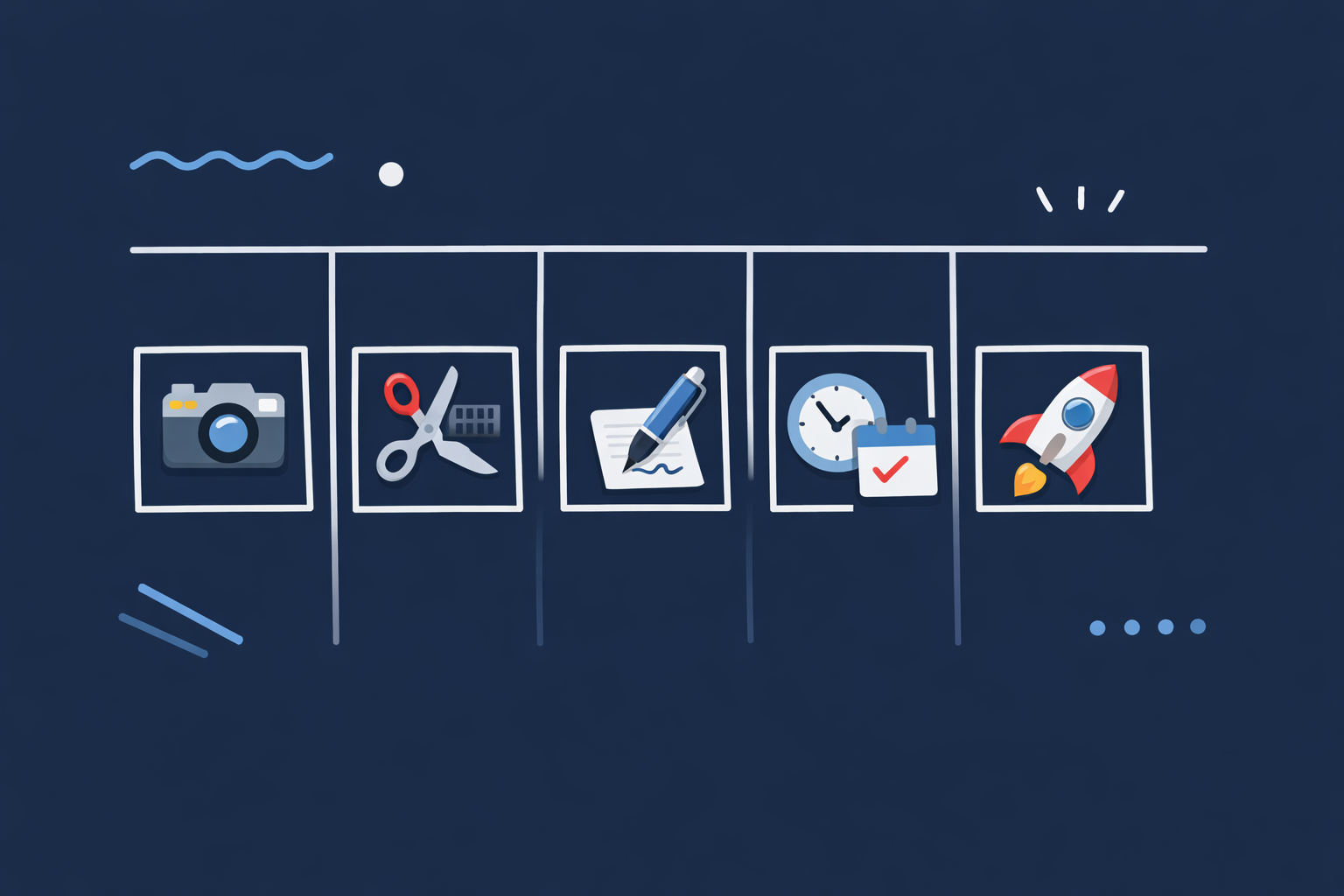
The real drag on volume is not ideas. It is context switching. Every time you jump between recording, editing, writing captions, and scheduling posts, you pay a mental reset cost.
Split recording and editing into separate days
Treat them as separate jobs. Record on Tuesday, edit and distribute on Thursday. Tuesday is purely generative: camera on, no second-guessing. Thursday is purely mechanical: clip selection, caption drafts, scheduling.
Creative output and editorial judgment use different mental modes. Running both on the same day slows each one down.
Sequence by task type, not by platform
Write all captions before opening the scheduler. Export all clips before drafting a single post. Jumping between tools mid-block adds invisible time to every step.
A founder running a weekly video series can batch all social copy in one Thursday morning sitting, then move straight to scheduling. The content week wraps before Friday starts.
Connecting Output to Business Goals
Consistent publishing without a clear business goal is just noise. The content stack only compounds into results when each format maps to a specific outcome.
Map each format to a stage in the buyer journey
- Awareness: Short clips and quote cards reach people who have never heard of you
- Consideration: The full video or detailed post gives interested viewers a reason to stay
- Action: The newsletter or direct post gives subscribers a clear next step
Where it gets interesting
The same system works beyond organic content. We have used ContentFries AI tools to brainstorm ad concepts for a client, generated static images from those concepts, and ran them as Facebook ads. Those ads have been bringing in leads for high-ticket offers at around one euro per contact for months. Same source material, completely different output target.
The practical closing step
Pick one business goal your content should support this quarter. Write it at the top of your SOP. Every time you record, ask whether the topic connects to that goal. If it does not, move it to a backlog and pull a topic that does.
The system you have built, one recording, a repeatable recipe, batched production, gets you to consistent output. Connecting that output to a goal is what turns it into a growth asset.